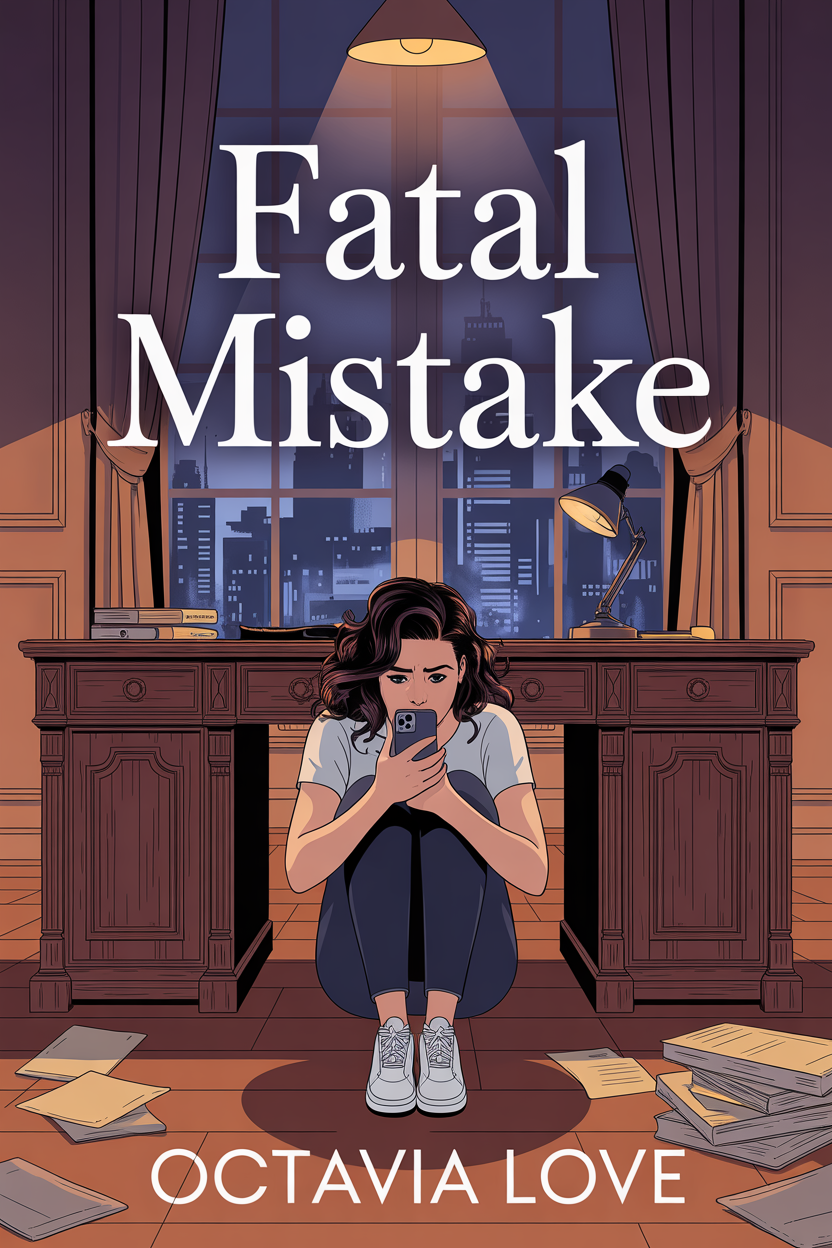
You know that specific brand of 2 AM panic where you’ve done something irreversible and your brain just refuses to process it? That’s the first chapter of Fatal Mistake, and it grabs you by the collar and does not let go. One sleepy mistake — a nude selfie sent to her boss instead of her boyfriend — and Jenny Houston’s entire carefully managed professional life begins to come apart at the seams in the most spectacularly chaotic way possible. I started this book intending to read one chapter before bed. I finished it with my phone at four percent battery and absolutely zero regrets.
The Story
Jenny Houston is a walking disaster — brilliant at her job except when she isn’t, perpetually one mistake away from getting fired, and desperately in love with her career if not quite with her life. When she accidentally sends an intimate photo to Derek Stein, her brooding, gorgeous, and frankly terrifying CEO boss, she does the only logical thing: breaks into his mansion in the middle of the night to delete the message before he sees it.
She does not delete the message. She does, however, steal the wrong phone, get caught climbing a marble horse statue, and accidentally grope her boss before his furious girlfriend shows up and slaps her across the face.
That’s the first three chapters.
What follows is a glorious escalation — a fake engagement cooked up to disentangle Derek from his controlling ex, a shopping trip where he walks in on Jenny changing and has opinions about it, an encounter with hired muscle in a parking garage, a mother who immediately sees through every lie while also adoring all of them, and kiss scenes that get increasingly impossible to call strictly professional. Underneath all the comedy is a slower and more serious burn: the question of what it actually means when Derek Stein, a man who treats every relationship as a transaction, starts looking at Jenny like she’s the one variable he can’t control.
What Hooked Me
Derek Stein is that rare boss-romance hero who earns the stern CEO archetype rather than just wearing it. He doesn’t thaw easily or suddenly. His curtness comes with genuine moments of dry humor, and his protectiveness — which appears before he’ll admit he feels it — arrives sideways, in gestures he doesn’t name. When he shows up outside Jenny’s apartment building because he was worried after Valerie’s threats, he doesn’t call it concern. When he takes her side in front of the board, in front of Valerie, in front of his own mother, he frames it as strategy. The fact that the framing is increasingly thin is the whole pleasure of watching him.
The decision to give Derek a POV chapter midway through is inspired. Watching him try to file Jenny Houston under “manageable professional problem” while his inner monologue does something else entirely is both funny and genuinely hot. The moment he discovers the photo in his deleted files — and the way he closes the screen “with a violent click” — tells you everything you need to know about how deeply he’s already in.
Jenny herself carries the book. She’s clumsy the way genuinely smart people sometimes are — so busy managing ten things that she fumbles the obvious one. She’s not passive, and the novel is careful not to make her victimhood part of her identity. When Valerie slaps her, she doesn’t cower. When Kyle pushes too far, she pushes back and means it. When Derek’s mother demands a kiss for proof of love, Jenny doesn’t look to Derek for permission — she issues a challenge. The moment she murmurs “Unless you’re scared you can’t handle it” is the moment you realize she’s been holding her own in this dynamic the whole time.
The fake engagement arc is the real engine of the chemistry. There’s something irresistible about two people constructing an elaborate romantic fiction — picking origin stories, crafting private jokes, learning each other’s tells — all while insisting to themselves it means nothing. By the time Mrs. Stein insists on a kiss and Derek’s hand slides to the nape of Jenny’s neck, the line between “acting” and something far more inconvenient has been gone for chapters.
“You want to play with fire, Jenny? Remember who holds the matches.”
What Didn’t Quite Land
Kyle is where the book stumbles most. His arrival at Stein Industries as the new secretary is a great comedic setup, but his behavior in the scene that follows reads less like an immature boyfriend and more like someone who doesn’t take no for an answer — which sits uncomfortably in a story playing for laughs. The narrative acknowledges it imperfectly, and the tonal gap lingers.
The POV shift to Derek in chapter nine is the right creative choice in the wrong place. Arriving without warning in a story otherwise told entirely from Jenny’s perspective, it’s briefly disorienting before it becomes one of the best chapters in the book. Earlier hints of dual POV or a more deliberate transition would have let readers settle into it rather than stumble.
A handful of early chapters also cycle through the same beat — Jenny makes a catastrophic error, Derek discovers it, everyone survives — without quite escalating the emotional stakes between repetitions. The story finds its stride when it moves beyond the chaos mechanics and into actual vulnerability.
The Verdict
Fatal Mistake delivers everything a boss romance should: a heroine who refuses to apologize for taking up space, a hero who’s been in control of everything except the one thing that matters, and enough heat between them to make the “this is strictly professional” protests genuinely funny. The comedy is broad but earned, the tension is real, and the fake engagement setup in particular is executed with more genuine feeling than most straight romances manage.
It’s messy and loud and completely unashamed about what it is, which is exactly the right energy for a book that starts with an accidental nude text to the CEO.
Content note: includes a brief scene of workplace coercion from a secondary character.
Perfect for: Fans of Tessa Bailey’s Fix Her Up or Abby Jimenez’s The Friend Zone who want their contemporary romance with explicit heat and a hero who’s grumpy until he absolutely isn’t. If “enemies to lovers in a glass-walled corner office” is your idea of a good time — start here.